

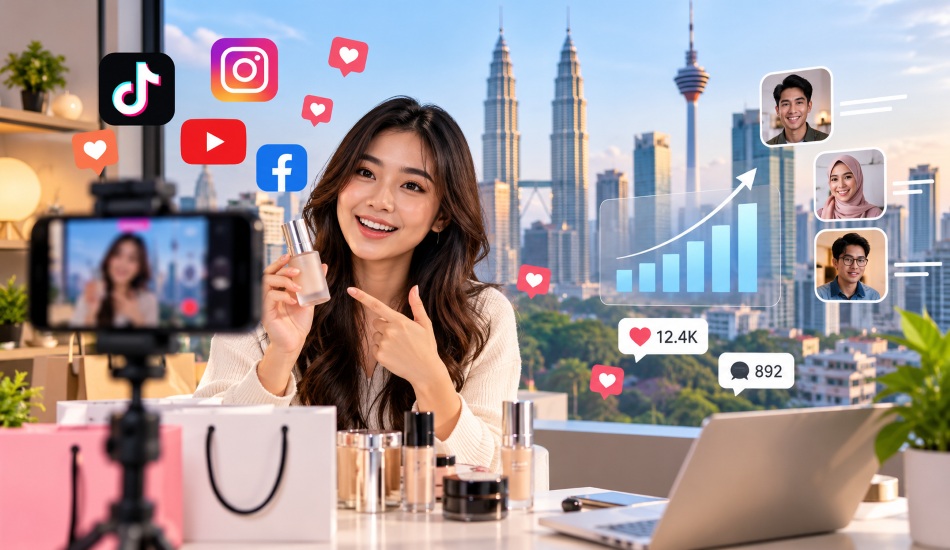
KOL marketing in Malaysia means working with Key Opinion Leaders (KOLs) to share your brand with their audiences. KOLs are the trusted creators and experts your customers already follow. Done well, KOL marketing builds trust faster than advertising. Done badly, it spends budget on views that never turn into sales.
This guide covers the essentials for Malaysian brands. You will learn the types of KOLs, typical rates by tier, how to choose and brief creators, which disclosure rules apply, how to measure results, and how PR can make every KOL post work harder.
What Is KOL Marketing?
KOL marketing is a partnership between a brand and a person whose opinion an audience trusts. The KOL creates content about your product or service and shares it on their own channels. In return, they receive a fee, free products, a commission or another benefit.
In Malaysia, people often use “KOL” and “influencer” to mean the same thing. The labels do differ slightly, and the difference matters when you plan a campaign.
KOL vs Influencer vs KOC: What Is the Difference?
|
Type |
Who they are |
Why audiences trust them |
Best for |
|---|---|---|---|
|
KOL (Key Opinion Leader) |
An expert or respected voice in a field, such as a doctor, chef, tech reviewer or fitness coach |
Knowledge and credibility |
Complex or high-value products, and launches that need authority |
|
Influencer |
A creator with a loyal following, often in lifestyle, beauty, food or travel |
Personality and relatability |
Awareness, product discovery and social buzz |
|
KOC (Key Opinion Consumer) |
An everyday user with a small following who posts honest reviews |
It feels like a friend’s recommendation |
Reviews and social proof, especially on TikTok and Xiaohongshu |
|
Celebrity |
An actor, singer, athlete or other public figure |
Fame and mass recognition |
National launches and big brand moments |
Strong campaigns often mix these groups. One or two KOLs add authority, while a wider group of KOCs adds honest, everyday reviews.
Why KOL Marketing Works in Malaysia
Social media is part of daily life for most Malaysians. DataReportal’s Digital 2026: Malaysia report counted 30.7 million social media user identities in October 2025. That is 85.0% of the population.
The same report shows the advertising reach of the biggest platforms in late 2025:
- TikTok: 30.7 million users aged 18 and above
- YouTube: 23.6 million users
- Facebook: 23.0 million users
- Instagram: 16.1 million users
These are ad reach figures, not exact user counts. Still, they show where Malaysian attention sits.
Language matters too. A KOL who speaks to your audience in Bahasa Malaysia, English, Mandarin, Cantonese or Tamil can explain your product in a way a translated ad cannot. Festive seasons such as Chinese New Year, Hari Raya Aidilfitri and Deepavali, plus mega sales like 11.11, create extra moments when creator content gets noticed.
KOL Tiers and Typical Rates in Malaysia
KOL fees rise with audience size. Follower count is only one factor, though. The table below shows indicative per-post ranges, based on rate cards published by Malaysian agencies and creators in 2025 and 2026.
|
Tier |
Followers |
Typical fee per post |
Best for |
|---|---|---|---|
|
Nano |
1,000 to 10,000 |
RM100 to RM1,000 |
Product seeding and local or niche reviews |
|
Micro |
10,000 to 100,000 |
RM500 to RM3,000 |
Most product campaigns and trusted niche content |
|
Mid-tier |
100,000 to 250,000 |
RM3,000 to RM8,000 |
A balance of reach and engagement |
|
Macro |
250,000 to 1 million |
RM8,000 to RM25,000 |
Mass awareness and major launches |
|
Celebrity |
1 million and above |
RM20,000 to RM50,000 or more |
National campaigns and big brand moments |
Several things push a quote up or down:
- Platform and format. A long YouTube review costs more than an Instagram Story.
- Production effort. Scripts, locations, props and vehicles add cost. If your shoot needs a car, SLPR also offers car rental for video production and KOL shoots.
- Usage rights. Reusing a KOL’s content in your own ads usually costs extra.
- Exclusivity. Asking a KOL to avoid your competitors for a period raises the fee.
- Language versions. Content in two or three languages takes more work.
- Timing. Rates often rise during festive seasons and big sale periods.
KOL fees are normally paid separately from agency management fees. If you are planning a full budget, see what PR agencies charge in Malaysia and how these line items fit together.
How to Choose the Right KOL
- Start with your audience, not follower count. Ask each KOL for audience insights, including location, age, gender and language. A creator with 30,000 followers in the Klang Valley can beat one with 300,000 spread across the region if your outlets are in KL.
- Check engagement quality. Look at saves, shares and real comments, not just likes. Good comments ask questions and tag friends. Sudden follower spikes or generic comments can signal bought followers.
- Review past brand work. See how the KOL handles sponsored posts. Check that they disclose properly and that the content still sounds like them.
- Check brand safety. Scroll back through their content. Look for past controversies and insensitive comments on race, religion or politics. Ask whether they already promote a competitor.
- Match the platform to the goal. TikTok suits reach and short videos. Instagram suits lifestyle and beauty. YouTube suits detailed reviews. Xiaohongshu helps you reach Chinese-speaking shoppers, and Facebook still reaches older audiences well.
- Test before you commit. Start with product seeding or a single paid post. Then move the best performers into longer ambassador deals.
How to Brief a KOL
A good brief gives a KOL clear guardrails and room to be themselves. Over-scripted posts look like ads, and audiences scroll past them.
Cover these points in every brief:
- Objective: awareness, website visits, sign-ups or sales.
- Key messages: two or three points, not ten.
- Must-haves: product name, brand handle, link or promo code, and the disclosure label.
- Approved claims: only claims the brand can prove, with the evidence attached.
- Don’ts: competitor bashing, medical claims, religious references and unsafe stunts.
- Deliverables and dates: formats, number of posts, draft deadline and posting window.
- Approvals: who reviews drafts and how many revision rounds are included.
Keep the brief consistent with your other channels. If the launch also has a press release, the KOL’s key messages should match it. These tips on writing a product launch press release will help you lock in that core story first.
Put the Agreement in Writing
A short written agreement prevents most disputes. The Content Forum’s draft Influencer Guidelines suggest putting the key terms in writing. These include content ownership and licence terms, disclosure duties, the approval process, and when either side can ask for changes or removal. Also agree on usage rights, exclusivity, payment terms and timelines.
KOL Disclosure Rules in Malaysia
Paid KOL content is advertising. The Malaysian Communications and Multimedia Content Code 2022 says endorsements made under a commercial arrangement must be clearly disclosed. Its practical rules include:
- Use an upfront label such as “Ad”, “Advertisement”, “Advertisement Feature” or “Sponsored”.
- Avoid vague terms like “sp”, “spon” or “collab”, and avoid “thanks” or “ambassador” on their own.
- Write the disclosure in the same language as the endorsement.
- In videos, show the disclosure in the video itself, not only in the description.
- In live streams, repeat the disclosure from time to time for viewers who join late.
- If a virtual influencer appears in an ad, make that clear to viewers.
The Code places the main responsibility for its advertising rules on the advertiser. That means the brand, although KOLs and agencies must follow the rules too. Compliance with the Code is voluntary, but it can serve as a legal defence. The Content Forum’s Complaints Bureau can also impose fines of up to RM50,000 for breaches.
The same idea applies to sponsored articles in the media. Readers should always know whether they are reading editorial or advertorial content.
What the 2026 Influencer Guidelines Add
In 2026, the Content Forum opened a public consultation on new Influencer Guidelines. The draft builds on the Content Code. The final wording may still change, but the direction is clear:
- Gifted products, hospitality, affiliate links and discount codes all count as commercial relationships.
- Platform labels such as “Paid Partnership” help, but they may not be enough on their own.
- Brands and agencies share responsibility for briefs, approvals and corrections.
- Fake followers, bought engagement and fabricated reviews should not be used.
- Brands and agencies should keep reasonable records of briefs, claims and approvals.
Extra Rules for Health, Beauty, Halal and Finance Brands
Some sectors carry stricter rules. A KOL post cannot say anything a normal ad is not allowed to say.
- Health products and medical services: Ads need prior approval from the Ministry of Health’s Medicine Advertisements Board (MAB). Approved ads carry a KKLIU number, and this applies to KOL content too.
- Cosmetics: Claims must follow the NPRA’s cosmetic advertising guidelines.
- Halal claims: Only mention halal status if the product holds valid certification from JAKIM or a recognised body.
- Investments: KOLs who promote capital market products may fall under Securities Commission Malaysia rules.
If you are unsure about a claim, get it checked before the post goes live.
How to Measure KOL Campaign Results
Set the goal before the campaign starts. Then track the numbers that match it.
|
Goal |
What to track |
|---|---|
|
Awareness |
Reach, views and cost per thousand views (CPM) |
|
Engagement |
Saves, shares, meaningful comments and engagement rate |
|
Website traffic |
Clicks from UTM-tagged links |
|
Sales |
Unique promo codes, affiliate links and cost per sale |
|
Brand lift |
Branded search volume, follower growth and share of voice |
|
Sentiment |
The tone of comments and mentions, plus common questions |
Ask each KOL to share screenshots of their post insights within seven days of posting. Compare the cost per result across creators, not just total views. Then reuse your best-performing content in paid ads, if your usage rights allow it.
PR vs KOL Marketing: How They Work Together
KOL marketing and PR are often run by separate teams. That is a missed opportunity. KOLs bring reach and relatability. Public relations brings credibility through media coverage that audiences see as independent. Each one fills the other’s gap.
|
KOL marketing |
PR (earned media) |
|
|---|---|---|
|
How it is secured |
Paid, gifted or commission-based |
Earned through newsworthy stories |
|
Main strength |
Reach, relatability and fast social buzz |
Credibility and third-party trust |
|
Lifespan |
Usually peaks within days on social feeds |
Stays in search results and news archives |
|
Control |
The brand approves the content |
Journalists decide the final story |
Media coverage also matters for AI search. Muck Rack’s May 2026 study of more than 25 million links cited by ChatGPT, Claude and Gemini found that earned media made up 84% of citations. A strong KOL campaign gets people talking. Coverage gives search engines and AI tools credible sources to cite.
A Simple Launch Sequence That Combines Both
- Set one core message. Use it in the press release, the KOL brief and your social posts.
- Brief the media first. Share the news and offer previews or interviews. Then use press release distribution to widen reach on launch day.
- Invite KOLs to the launch. A media launch or preview gives KOLs fresh content and access to your spokespeople.
- Go live in waves. Let coverage and KOL posts land in the same week, followed by KOC reviews.
- Amplify the best content. Boost top KOL posts and share media coverage on your own channels.
- Monitor and respond. Track sentiment daily and keep a crisis management plan ready in case a post backfires.
SLPR used this mix of talent-led content and PR for Marrybrown’s “Fortune Burger” Chinese New Year launch. In two to three days, the Kongsi Fortune campaign video drew more than 600,000 organic views and over 2,800 shares. The launch generated RM2.23 million in PR value. You can see how the Marrybrown campaign came together on our Work + Impact page.
Common KOL Marketing Mistakes to Avoid
- Choosing KOLs by follower count alone.
- Over-scripting content until it sounds like an ad.
- Forgetting usage rights, then paying again to reuse a post.
- Using weak disclosure, such as “collab” or a brand tag only.
- Making claims the brand cannot prove.
- Running one-off posts instead of a series.
- Skipping brand safety checks before signing.
- Having no plan for negative comments or a creator controversy.
When a KOL post draws criticism, respond quickly and with one consistent voice. This look at how reputation management and PR work together explains why monitoring and media relations should run side by side.
Plan Your Next KOL Campaign With SLPR
At SLPR Worldwide, we plan KOL campaigns as part of a wider communications strategy, not as stand-alone posts. We help brands choose and brief the right creators, check disclosures and claims, report on results, and connect KOL activity with media relations. Your story gets reach and credibility at the same time.
Ready to plan your next launch? Talk to our team, or learn more about our social media marketing services.
Frequently Asked Questions
What is the difference between a KOL and an influencer?
A KOL is usually trusted for expertise in a field, such as a doctor or tech reviewer. An influencer is usually trusted for personality and lifestyle. In Malaysia, many brands use the two terms to mean the same thing.
How much does a KOL cost in Malaysia?
Indicative rates start from about RM100 per post for nano creators and can pass RM20,000 for celebrities. Platform, format, usage rights and exclusivity all change the final price.
Do KOLs in Malaysia need to label sponsored posts?
Yes. The Content Code 2022 requires paid endorsements to be clearly disclosed with labels such as “Ad” or “Sponsored”. The label should be in the same language as the content.
Are micro KOLs better than celebrities?
For most product campaigns, a group of micro KOLs gives better engagement and trust for each ringgit spent. Celebrities suit big launches where mass reach matters most.
Can a PR agency run KOL campaigns?
Yes. A PR agency can manage KOLs alongside media relations, so both carry the same message. Running them together usually gives stronger results than running them separately.